Xiaomi is one of the leading electronic companies in the world and has its headquarters in Beijing. The company was established on 6th April 2010. The company deals with smartphones, fitness bands, headsets, smart TV, laptops, etc. Xiaomi came into light from its initial year of existence for its notable early sales figures (Shih, Lin & Luarn, 2014). The immense success of the company in a very short period is the result of its effective digital business model which has been evolved with time. The unique business model of Xiaomi is an amalgamation of software, internet services, and hardware. This type of business model which is more integrated is distinctive to the mobile industry.
Xiaomi introduced a destructive digital business model into the business market to increase its market share. The company adopted the business model of Amazon’s kindle into its smartphone market and lowered its device margin by 1/3 in comparison with the average smartphone available in the market (Lee et al., 2016). To realize its business model, the company implemented a pre-ordering measure and post-production measure. Xiaomi executed a differentiated strategy when compared to other smartphone companies in china by effectively keeping its online sales and promotion strategies with the main motto of including more specification and less price for the devices (Lee et al., 2016). It also contributes to the development of its MiOT ecosystem by offering financial aids to various start-up companies who develop products that could be sold under Xiaomi’s ecosystem (Xiaomi Global Community, 2020). In the past few years, the company has invested over $4 billion in approximately 270 companies (Jingli, 2019). The multi-faceted business model of Xiaomi has helped the company in building a platform to support various third parties working with or for the company, profiting especially from countries like India where the company has invested much capital to boost its software as well as hardware (The Economic Times, 2018).
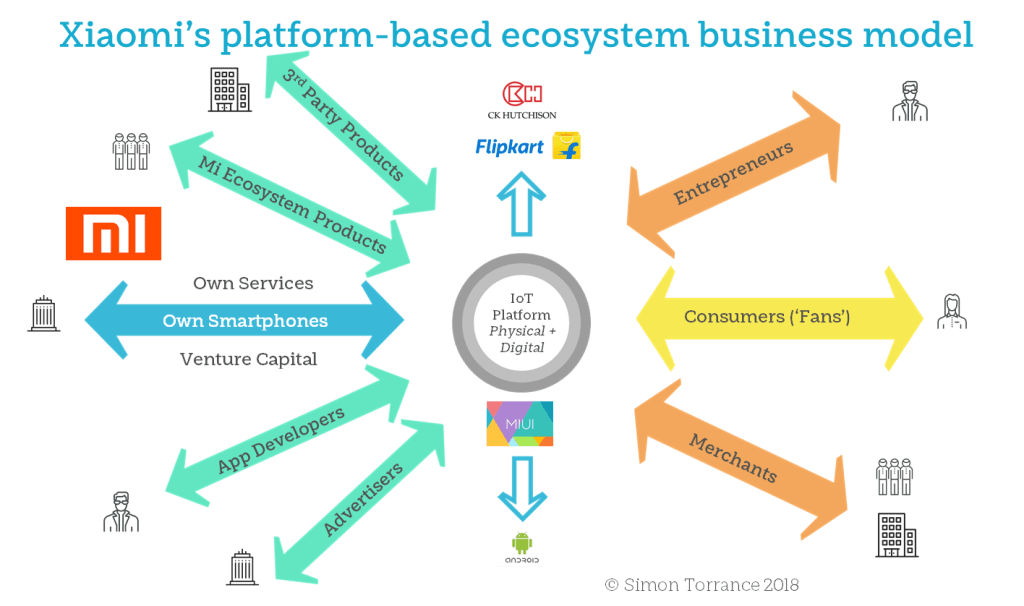
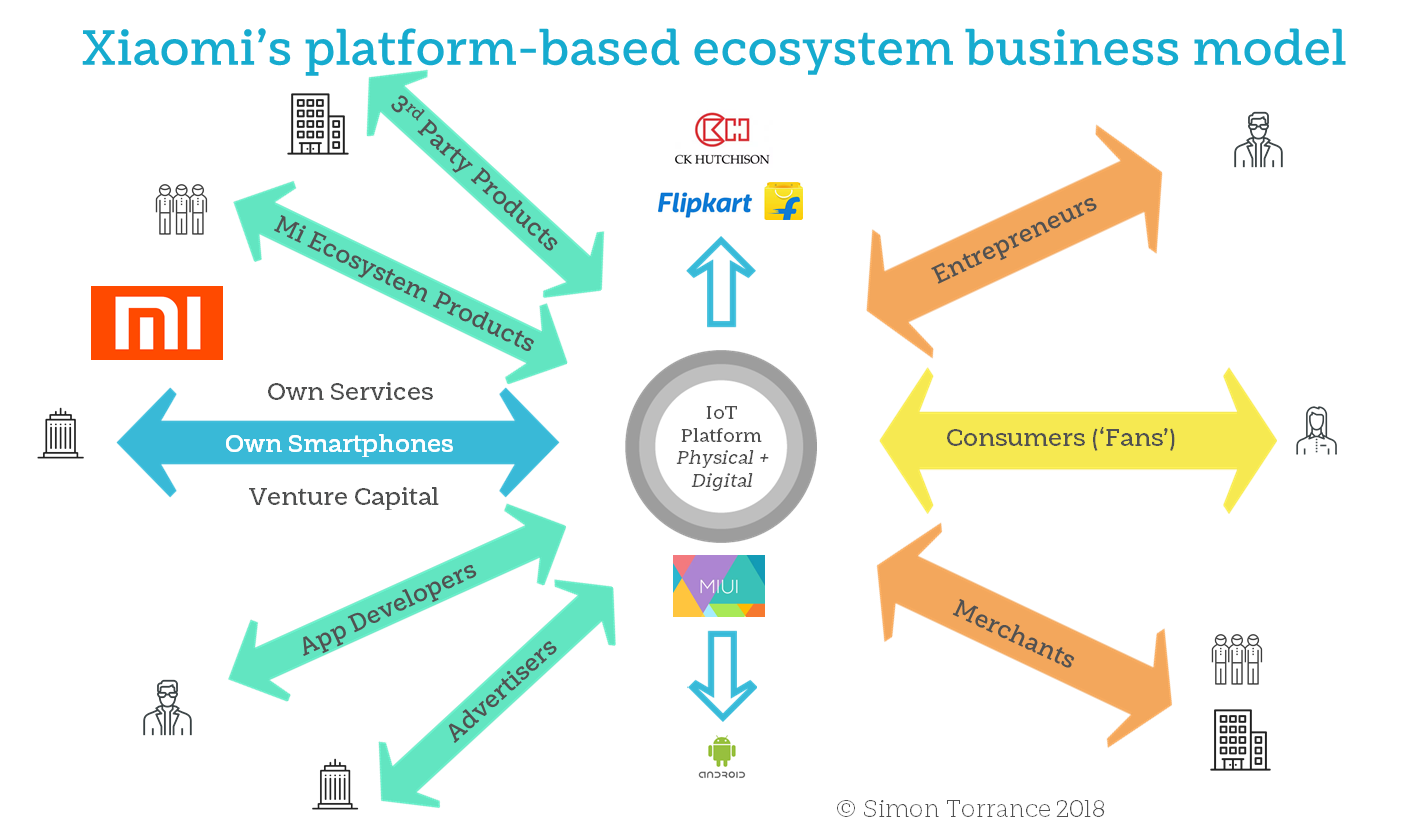
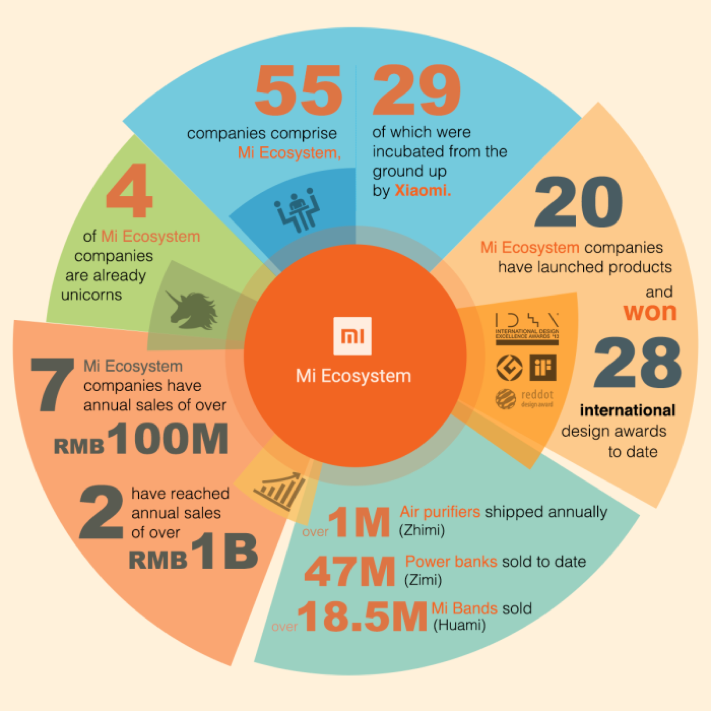
Under the ecosystem business model of Xiaomi, 4 companies among its 55 companies have already become ‘Unicorn Companies’ which means these four companies’ value became more than $1 billion (Jinzhi & Carrick, 2019), making the founder, Lei Jun a billionaire (Vinton, 2016). The company has also grabbed 28 awards for international design until now (Artashyan, 2017) which indicates the rapid growth of the company.
Earlier, the company had online-only sales for its products, but it realized the need for offering face-to-face sales. Now the company has different physical stores named ‘Mi Home’ that they are planning to expand even more in various domains in the upcoming years. As shown above, the physical products of the company are developed by the company and other members in its ecosystem.
To expand its business internationally, even more, the company is partnering with companies such as CK Hutchison in the territories of Europe and Asia. Xiaomi sells its products utilizing the Internet of Things (IoT) software as a platform in which the physical or digital channels are interlinked to its operating system without the need for human-computer interaction (Xiaomi Mi Community, 2020). The digital business model of Xiaomi has helped it create a wide variety of apps including the Xiaomi AI assistant which has over 57.9 active users (Statista, 2019). The digital business model of Xiaomi is quite different from the business models of some popular companies including Apple, Amazon, Netflix, etc. Apple generates its revenue from its hardware while Xiaomi advocates that it will generate revenues from its services. Xiaomi has focused its marketing strategy using social media sites primarily on Weibo in the Chinese market and utilizes Facebook for focusing on the global market (Lun & Yazdanifard, 2014).

Presently, Xiaomi is using multiple online channels to target its customers including websites like Amazon, Snapdeal, Flipkart, etc. and also making its products available on its website. Xiaomi regards their customers as the most essential aspect of their business and their business model depicts that the focus has been always on the customers. The company’s relationship with the customers and their trust in the company has built over the years. The company enjoys the benefit of a large customer base, loyal customers and a well-maintained online distribution channel. Initially, Xiaomi had focused on online platforms but with the brand value increase with the coming up of the ecosystem model, physical stores became a key asset for the brand since 2013 (Raju & Holm, 2019).
Companies under the ecosystem of Xiaomi also benefits from its strong supply chain. The process of generating profits have become faster since the overall market value of the company was around $ 30 billion (Salinas, 2019). From the beginning of its sales, the company used to maintain a low margin of profit generated from its hardware products. Xiaomi generated most of its profits from online services. It has been speculated that Xiaomi is also building its Artificial intelligence (AI) engine in the coming years and has plans to invest over $7.2 billion in this venture (Insider Inc., 2020). This can change the structure of the digital business model of the company in the future and can be a game-changer for the company in making it a market leader.
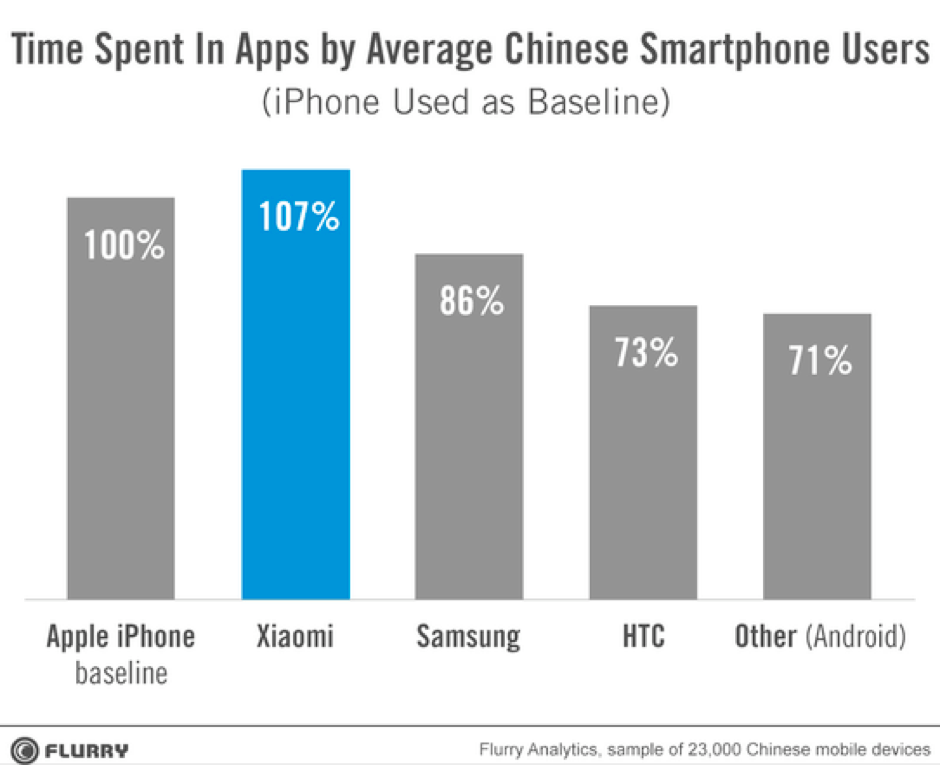
In the end, it can be said that the success of Xiaomi is not accomplished in just a few days, weeks or even months. The company has been known for its quality of the products at affordable prices which has been attracting a large customer base. The success of the company has been built through its digital business model by believing in its main product, MIUI which has been used by over 291.6 million customers worldwide (Pathak, 2019). This indicates the effectiveness of the digital business model used by the company and its customer-oriented marketing strategies which will facilitate its growth in the market in the future as well.
Reference
Artashyan, A. (2017). Xiaomi Products have won 28 design awards in total in 2017. GizChina. Retrieved from https://www.gizchina.com/2017/12/29/xiaomi-products-won-28-design-awards-total-2017/
Economic Times. (2018). Xiaomi to invest Rs 6000-7000 crore in 100 Indian startups. Retrieved from https://economictimes.indiatimes.com/https://economictimes.indiatimes.com/small-biz/startups/newsbuzz/xiaomi-to-invest-rs-6000-7000-crore-in-100-indian-startups/articleshow/63467863.cms?utm_source=contentofinterest&utm_medium=text&utm_campaign=cppst
Insider Inc. (2020). Xiaomi’s $7.2-billion AI investment plan could bolster its declining smartphone segment. Retrieved from https://www.businessinsider.com/xiaomi-reinvests-in-artificial-intelligence-powered-device-ecosystem-2020-1?IR=T
Jingli, S. (2019). After investing in 270 startups, Xiaomi sets up an investment company. KrAsia. Retrieved from https://kr-asia.com/after-investing-in-270-startups-xiaomi-sets-up-an-investment-company
Jinzhi, Z., & Carrick, J. (2019). The Rise of the Chinese Unicorn: An Exploratory Study of Unicorn Companies in China. Emerging Markets Finance and Trade, 55(15), 1-15.
Lee, S. H., Kwon, Y., Lee, J. H., & Park, Y. I. (2016). Creative Imitation as Catch-up Strategy: A Business Model. Asian Journal of Innovation & Policy, 5(1).
Lun, O. K., & Yazdanifard, R. (2014). Guerrilla Marketing; A Successful Business Model for Xiaomi.
Pathak, T. (2019). Three Key Takeaways from Xiaomi Third Quarter Earnings Call. Counterpoint Technology Marketing Research. Retrieved from https://www.counterpointresearch.com/three-key-takeaways-xiaomi-third-quarter-earnings-call/
Raju, M. A. U., & Holm, J. R. (2019). The role of Business model innovation and leadership for start-up growth: A case study of Xiaomi. Master Thesis. Denmark: Aalborg University.
Salinas, S. (2019). Xiaomi, once dubbed the ‘Apple of China,’ has lost 40% of its value since its IPO last year. CNBC. Retrieved from https://www.cnbc.com/2019/01/16/xiaomi-apple-of-china-has-lost-25percent-of-its-value-this-year-.html
Shih, C. C., Lin, T. M., & Luarn, P. (2014). Fan-centric social media: The Xiaomi phenomenon in China. Business Horizons, 57(3), 349-358.
Statista. (2019). Number of monthly active users (MAUs) of the Xiaomi AI assistant worldwide in 2018 and 2019. Retrieved from https://www.statista.com/statistics/967715/worldwide-xiaomi-ai-assistant-users/
Vinton, K. (2016). Meet The 14 Unicorn Startups That Have Created 25 Billionaires. Forbes. Retrieved from https://www.forbes.com/sites/katevinton/2016/03/06/meet-the-14-unicorn-startups-that-have-created-25-billionaires/#3c9ede125485
Xiaomi Global Community. (2020). MiOT Ecosystem. Retrieved from https://xiaomi-mi.com/ecosystem/
Xiaomi Mi Community. (2020). What Is IoT? And How Does It Work?. Retrieved from https://c.mi.com/thread-2579485-1-0.html
 songsong

2 replies on “The Digital Business Model of Xiaomi”
Xiaomi is trying to emulate Apple by simplifying its business model to “software + hardware + Internet services”. From the application software to the system level to the final hardware, it tries to build an ecosystem of Xiaomi phones, MIUI, Xiaomi box, mall, cloud services and developers in a vast Android ecosystem. However, founder of Xiaomi believes that the difference between Xiaomi and apple lies in that Xiaomi does not operate around the profit of hardware, but extends to the profit of software and services from the hardware instead of relying on the profit of hardware. In other words, it adopts the mode of “Free+Premium”, which first encircle a large number of users with hardware that makes little or no money, and then provides paid software and value-added services.
赞赞
[…] 2. 2. https://songsong0824.design.blog/ […]
赞赞