Reading the blogs of other bloggers and posting comments on them have multiple advantages for any blogger or learner. Blogging helps in assembling of social support by establishing connections with people sharing similar thoughts and are empathetic bloggers, regardless of where they reside or whether they would ever get an opportunity to meet them in real life (Baker & Moore, 2011). Reading other learners’ blogs help in acknowledging their work and having opportunities to learn from their perspective on a particular subject. Additionally, it also helps in building valuable connections with other learners within the university and in the entire MOOC community. It enhances the knowledge of bloggers by exploring the untapped areas of a specific topic. For instance, we had to discuss the impact of digitization on different job roles and I got the opportunity to learn about different job roles and their concerns regarding the increasing digitization of the economy.
For boosting engagement on our blog posts, comments can be used as an effective tool as it helps in grabbing the attention of the content creator and other viewers. Posting valuable comments on the blogs of other learners provides the content creator with an acknowledgement of their perspectives and they might want to learn more about the individual who posted a comment. In turn, they might also like your blog and might want to post a comment to appreciate or give feedback for improvement. Receiving appreciation for the blog helps in boosting the morale of bloggers to continue their work and feedbacks help in improving the existing methods or perspectives on a particular subject. In summary, it favourably impacts the engagement on our blogs discussing similar subjects or perspectives.
Comprehending the critical points discussed by learners and acknowledging them can also help in improving the relationship with bloggers, whether within the university or wide MOOC community. I posted comments on the blogs that raised my interest and found useful for enhancing my current knowledge of the digital business world throughout this module. Additionally, I learned that spreading negativity by criticizing the work of others may create undesirable outcomes. One should post constructive comments when showing disagreement so that it could encourage the content creator to understand our point and improve in the future. overall, reading and commenting on the blogs of other learners helps in engaging people, building a better relationship and above all, becoming a successful blogger.
References
Baker, J. R., & Moore, S. M. (2011). An opportunistic validation of studies on the psychosocial benefits of blogging. Cyberpsychology, Behavior, and Social Networking, 14(6), 387-390.
Xiaomi is one of the leading electronic companies in the world and has its headquarters in Beijing. The company was established on 6th April 2010. The company deals with smartphones, fitness bands, headsets, smart TV, laptops, etc. Xiaomi came into light from its initial year of existence for its notable early sales figures (Shih, Lin & Luarn, 2014). The immense success of the company in a very short period is the result of its effective digital business model which has been evolved with time. The unique business model of Xiaomi is an amalgamation of software, internet services, and hardware. This type of business model which is more integrated is distinctive to the mobile industry.
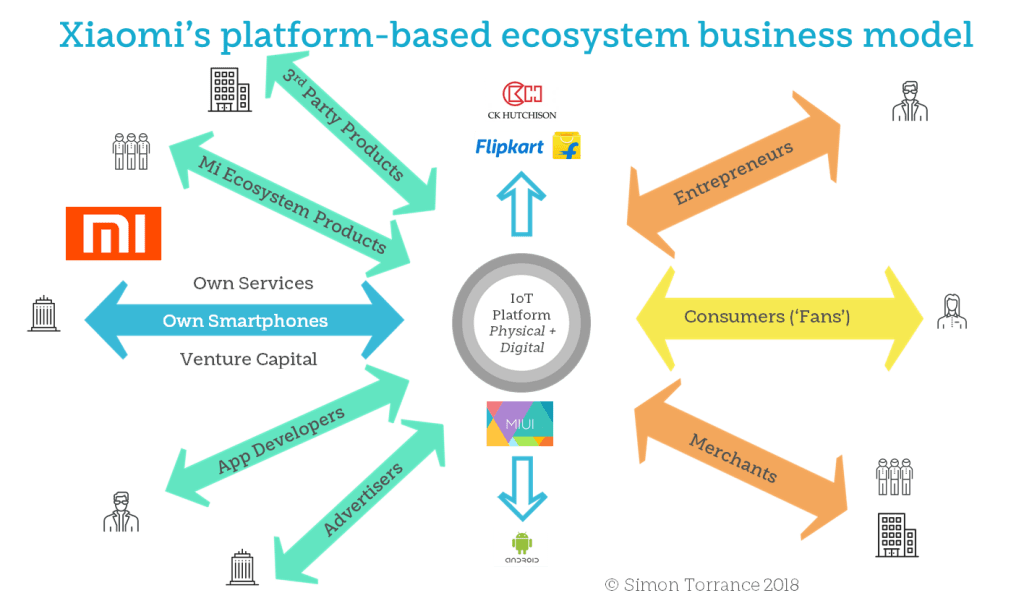
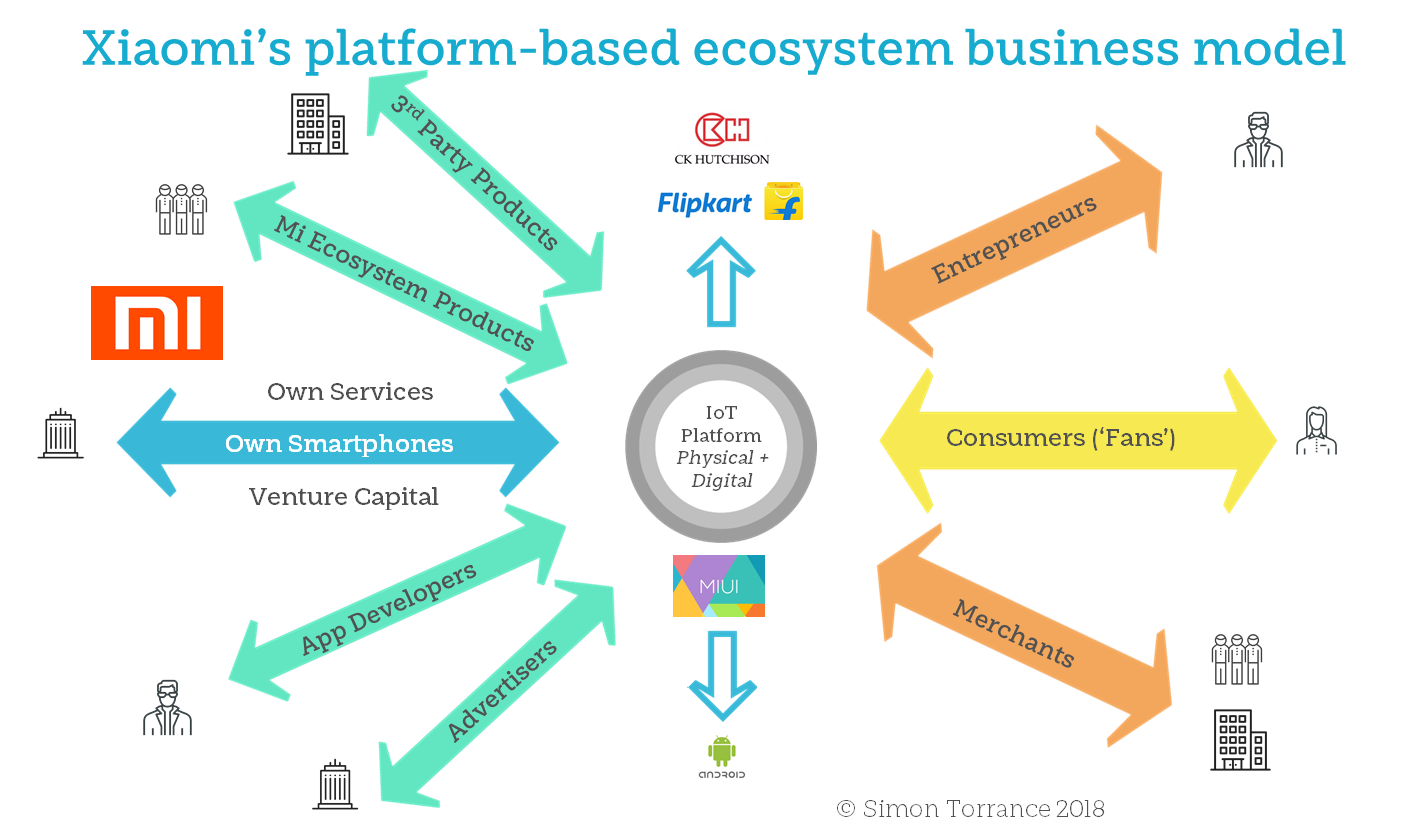
Xiaomi introduced a destructive digital business model into the business market to increase its market share. The company adopted the business model of Amazon’s kindle into its smartphone market and lowered its device margin by 1/3 in comparison with the average smartphone available in the market (Lee et al., 2016). To realize its business model, the company implemented a pre-ordering measure and post-production measure. Xiaomi executed a differentiated strategy when compared to other smartphone companies in china by effectively keeping its online sales and promotion strategies with the main motto of including more specification and less price for the devices (Lee et al., 2016). It also contributes to the development of its MiOT ecosystem by offering financial aids to various start-up companies who develop products that could be sold under Xiaomi’s ecosystem (Xiaomi Global Community, 2020). In the past few years, the company has invested over $4 billion in approximately 270 companies (Jingli, 2019). The multi-faceted business model of Xiaomi has helped the company in building a platform to support various third parties working with or for the company, profiting especially from countries like India where the company has invested much capital to boost its software as well as hardware (The Economic Times, 2018).
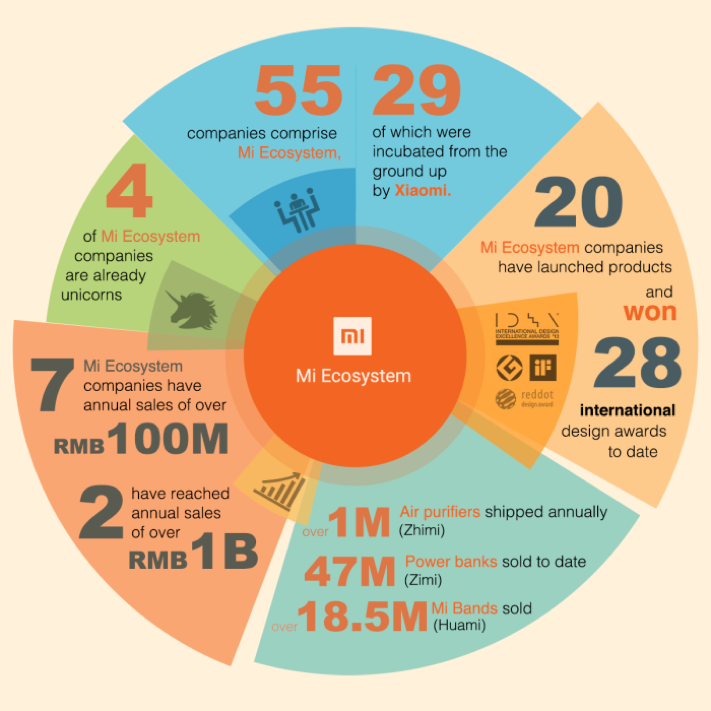
Under the ecosystem business model of Xiaomi, 4 companies among its 55 companies have already become ‘Unicorn Companies’ which means these four companies’ value became more than $1 billion (Jinzhi & Carrick, 2019), making the founder, Lei Jun a billionaire (Vinton, 2016). The company has also grabbed 28 awards for international design until now (Artashyan, 2017) which indicates the rapid growth of the company.
Earlier, the company had online-only sales for its products, but it realized the need for offering face-to-face sales. Now the company has different physical stores named ‘Mi Home’ that they are planning to expand even more in various domains in the upcoming years. As shown above, the physical products of the company are developed by the company and other members in its ecosystem.
To expand its business internationally, even more, the company is partnering with companies such as CK Hutchison in the territories of Europe and Asia. Xiaomi sells its products utilizing the Internet of Things (IoT) software as a platform in which the physical or digital channels are interlinked to its operating system without the need for human-computer interaction (Xiaomi Mi Community, 2020). The digital business model of Xiaomi has helped it create a wide variety of apps including the Xiaomi AI assistant which has over 57.9 active users (Statista, 2019). The digital business model of Xiaomi is quite different from the business models of some popular companies including Apple, Amazon, Netflix, etc. Apple generates its revenue from its hardware while Xiaomi advocates that it will generate revenues from its services. Xiaomi has focused its marketing strategy using social media sites primarily on Weibo in the Chinese market and utilizes Facebook for focusing on the global market (Lun & Yazdanifard, 2014).
Presently, Xiaomi is using multiple online channels to target its customers including websites like Amazon, Snapdeal, Flipkart, etc. and also making its products available on its website. Xiaomi regards their customers as the most essential aspect of their business and their business model depicts that the focus has been always on the customers. The company’s relationship with the customers and their trust in the company has built over the years. The company enjoys the benefit of a large customer base, loyal customers and a well-maintained online distribution channel. Initially, Xiaomi had focused on online platforms but with the brand value increase with the coming up of the ecosystem model, physical stores became a key asset for the brand since 2013 (Raju & Holm, 2019).
Companies under the ecosystem of Xiaomi also benefits from its strong supply chain. The process of generating profits have become faster since the overall market value of the company was around $ 30 billion (Salinas, 2019). From the beginning of its sales, the company used to maintain a low margin of profit generated from its hardware products. Xiaomi generated most of its profits from online services. It has been speculated that Xiaomi is also building its Artificial intelligence (AI) engine in the coming years and has plans to invest over $7.2 billion in this venture (Insider Inc., 2020). This can change the structure of the digital business model of the company in the future and can be a game-changer for the company in making it a market leader.
In the end, it can be said that the success of Xiaomi is not accomplished in just a few days, weeks or even months. The company has been known for its quality of the products at affordable prices which has been attracting a large customer base. The success of the company has been built through its digital business model by believing in its main product, MIUI which has been used by over 291.6 million customers worldwide (Pathak, 2019). This indicates the effectiveness of the digital business model used by the company and its customer-oriented marketing strategies which will facilitate its growth in the market in the future as well.
Jinzhi, Z., & Carrick, J. (2019). The Rise of the Chinese Unicorn: An Exploratory Study of Unicorn Companies in China. Emerging Markets Finance and Trade, 55(15), 1-15.
Lee, S. H., Kwon, Y., Lee, J. H., & Park, Y. I. (2016). Creative Imitation as Catch-up Strategy: A Business Model. Asian Journal of Innovation & Policy, 5(1).
Lun, O. K., & Yazdanifard, R. (2014). Guerrilla Marketing; A Successful Business Model for Xiaomi.
Raju, M. A. U., & Holm, J. R. (2019). The role of Business model innovation and leadership for start-up growth: A case study of Xiaomi. Master Thesis. Denmark: Aalborg University.
The Changing Role of Management Accountant in Digital Economy
Management accounting is one of the emerging processes used by businesses to increase the proficiency of the enterprises as well as to maximize their profits. Organizations require management accounting to realize the efficacy of their budget, operational costs and then to allocate the funds subsequently in the sales, production and other endeavors of the corporations. Hence, the job of management accountant holds vitality for an organization’s overall well-being.
Pierce and O’Dea (2003), as well as Yazdifar and Tsamenyi (2005), have argued that the responsibilities of the management accountants have been changed throughout the past two decades. Rapidly digitizing the economy is one of the major reasons behind these changes. According to Burns and Vaivo (2001), there are four particular management accountant roles that have been changed and they are:
• The provider of information related to costs
• The controller or the storekeeper
• The consultant for the internal business operations to support the business
• The member of the strategic team of management
Management accounting has a sustained and substantial past record of contributing directly to the planning decisions of the organization and controlling the organizational operations. The expansion of the role of accounting practices has been continued since the 18th century affecting management accounting and its practices. With the passage of time, the work of management accountants has become multidisciplinary. Additionally, the management tools used by the organizations have also encountered changes as per the technological and informational needs of the organization. Nowadays, the knowledge of the software or technology used by the organizations is very important to maintain the accuracy of results as well as to ensure timely results needed by the respective department within the organization.
The increasing use of technology has influenced the work of management accountants and their roles and responsibilities within the organizations. The developments in the Informational Technology (IT) sector are expected to enhance the existing power of management accountants over the line and system managers. This might help the management accountants to get their work done through them by exercising control and providing the right direction to them. The key driving forces that encompass the digital environment and the way it shaped the role played by the management accountant constitute:
• Internationalization and globalization of businesses
• Change in the work processes and attitudes
• Demands for the wider scope of accountability
• Information technology (IT)
• Growth in the number of non-accounting rivals and the expansion of alliances
• A more diverse range of products and services for customers
• An economy based on knowledge
However, the implementation of computerized systems such as Enterprise Resource Planning (ERP) systems has intensified the discussion on the transformation of the roles and relationships of the management accountants in the context of the technological businessenvironment. In a research, Scapens et al. (1998) have argued that the rapid usage of ERP systems within the organizations can minimize or eradicate the necessity of management accountants for the organizations in the sense that there might be no requirement of them as the supplier of information as the line managers can have direct access over any information they might need.
In the digital economy, organizations need faster results from the management accountants with a view to attain a competitive edge in the global market. Strategic management has been recognized as the primary knowledge base for management accountants in the future. The skills that are in high demand include analytical, technological, leadership, strategic and communication centered skills. Consequently, management accountants will be required to place themselves in such a way they could provide unified and strategic recommendations and decision making (Parker, 2002). This indicates that the vitality of strategic management practices will be increased in the future for the management accountants and will also be observed in various management accounting disciplines being taught in numerous educational institutions.
Regardless of the changing digital economy, the organizations will need management accountants to ensure the core competencies better than their competitors. A management accountant is expected to be acquainted with the changes in the market, be it a political change that could impact the market, competition, labor costs, supply of raw materials and costs associated with it, internal operations, and the like. This might be challenging for the management accountants to keep themselves updated with the relevant changes in the market as the managerial decisions are also dependent on the information provided by the management accountant.
However, with the development of skills as per the environmental changes, management accountants can outshine in the business market all across the globe. Therefore, the management accountants are required to fulfill the informational needs of the companies in advance so that it could help the companies in financial decisions making considering the availability of the funds and the requirements of the organizations. Consequently, it will help the companies in achieving economies of scale as well as a competitive edge in the digital economy.
Parker, L. D. (2002). Reinventing the management accountant. Transcript of CIMA address delivered at Glasgow University, 15.
Pierce, B., & O’Dea, T. (2003). Management accounting information and the needs of managers: Perceptions of managers and accountants compared. The British AccountingReview, 35(3), 257-290.
Scapens, R. W., Jazayeri, M., & Scapens, J. (1998). SAP: Integrated information systems and the implications for management accountants. Management Accounting, 76(8), 46–54.
Yazdifar, H., & Tsamenyi, M. (2005). Management accounting change and the changing roles of management accountants: a comparative analysis between dependent and independent organizations. Journal of Accounting & Organizational Change.
Hello, my name is Kristy. I’m from Hunan Province in the south of China. I am studying MSc International Business at the University of Exeter. Prior to undertaking a master’s degree, I completed my bachelors at Central South University in China.
During my undergraduate period, I opened a local club called Asgard with several partners, which gave me the opportunity to cooperate and communicate with accountants of third-party financial companies many times. This memorable and valuable experience made me have a strong interest and basic insights in business management and was one of the reasons why I chose this MSc and module.
In the future, I also hope that I have the opportunity to enter the new media industry and engage in new media operations, such as Sina micro-blog and WeChat official account. I believe this module will bring me more inspiration and guidance in my future career and further understanding and knowledge concerning the digital business world.